Between Stone and Water: The Millennial Narrative of Khmer Architecture
Khmer architecture showcases its unique charm through a distinctive style.
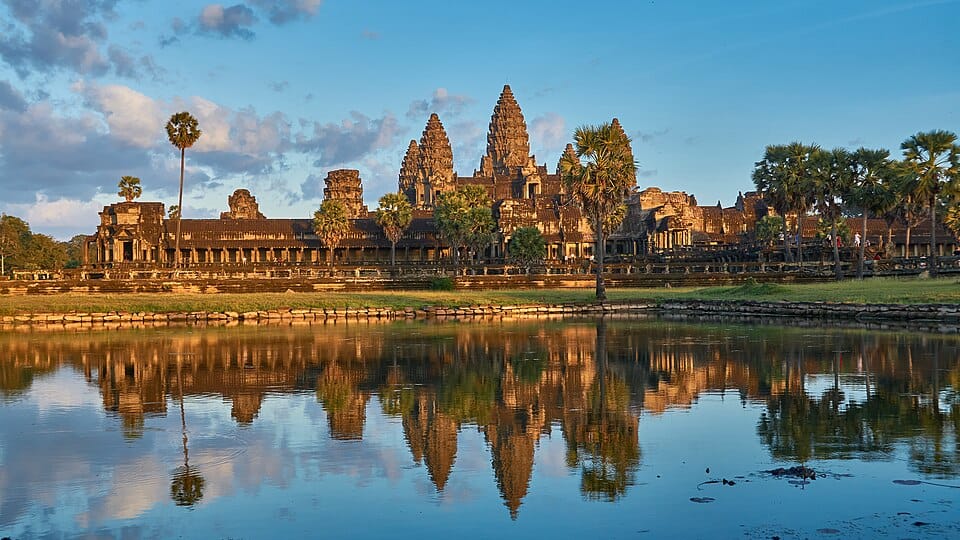
If you stand on the steps of Angkor Wat at dawn, watching the sunlight gradually climb the lotus-shaped tower tops, you realize—this is not just a temple.
It is a model of the cosmos. It is a political declaration. It is a grand answer to the question of 'how humans understand the world.'
The fascination of Khmer architecture lies not in its 'antiquity,' but in its complexity, precision, and its consistent embodiment of a structured worldview.
In this article, I want to guide you through re-understanding the logic of Khmer architecture from a design perspective—not as a tourist attraction, but as a civilization's spatial system.
I. They Were Not Building Temples, But Universes
- Mount Meru: Transforming Myth into Structure
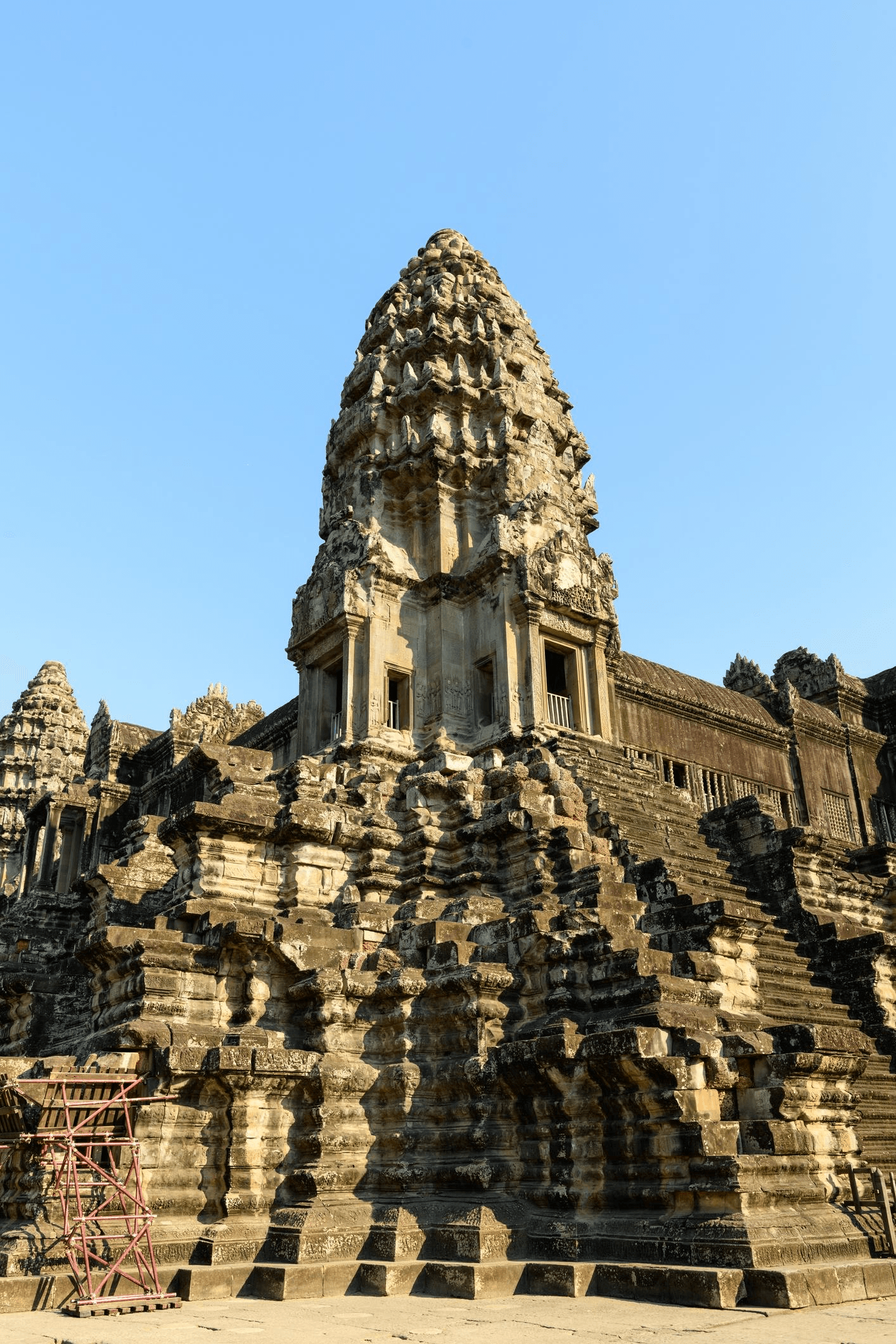
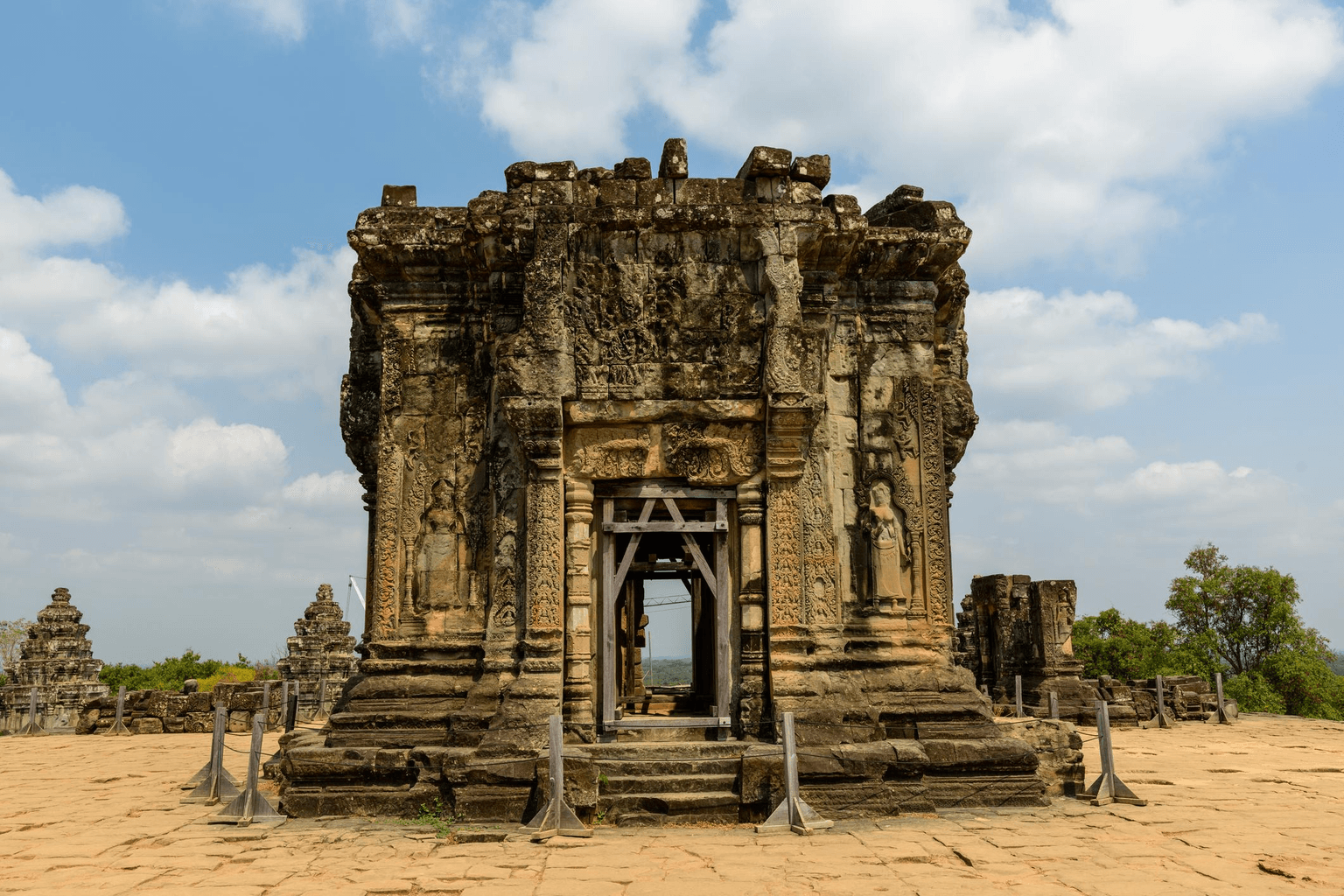
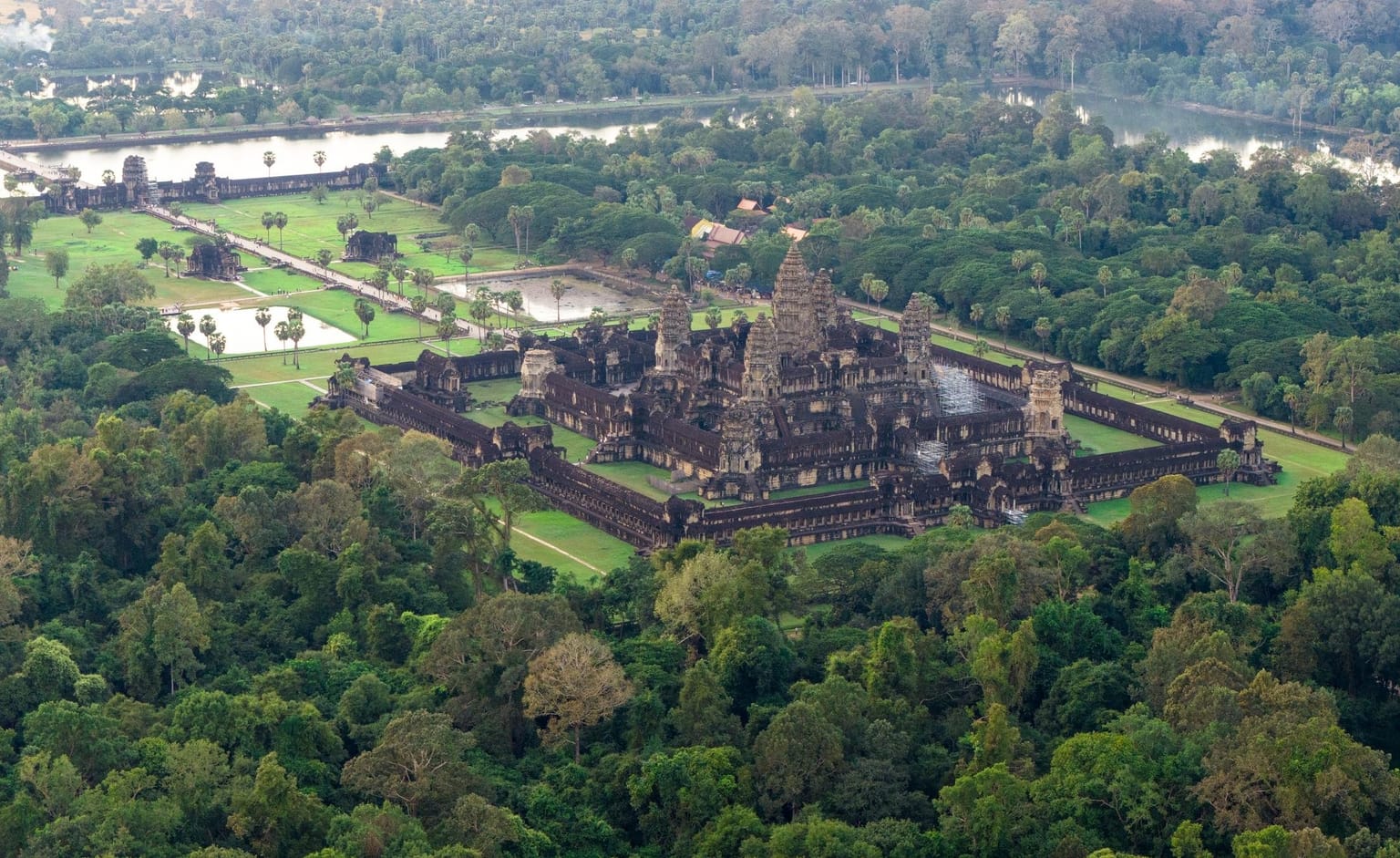
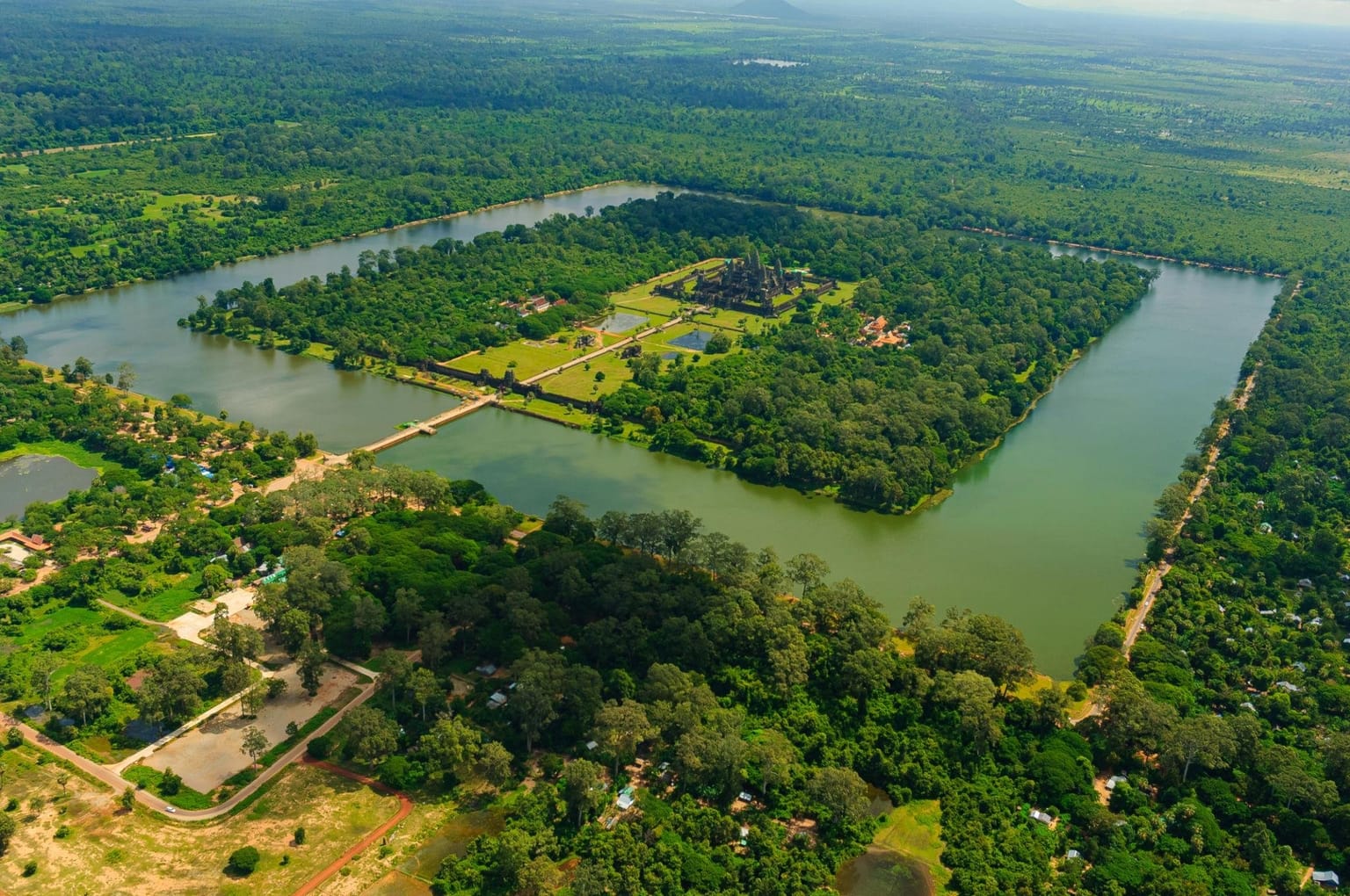
In the Hindu cosmology, Mount Meru is the center of the world. Its five peaks are the abodes of the gods.
Khmer architects did something profoundly 'engineering'—they transformed myth into structure.
•   Multi-tiered platforms = The ascending mountain body
•   Five central towers = The five peaks
•   Moat = The salty ocean surrounding the cosmos
For example, the five-tower layout of Angkor Wat is essentially a three-dimensional map of the universe.
And the earlier Phnom Bakheng had already accomplished this 'vertical narrative' with its five-level platform.
The 'height' here is not merely physical.
It reinforced a political structure— The king, as the 'God-King (Devaraja),' was the sole intermediary between heaven and earth.
This is a spatial politics of power.
- The Moat: Sacred Boundary Management
Khmer temples were never isolated structures.
They were surrounded by water.
The wide moats not only solved drainage problems but, more importantly— they served as a cosmic boundary line.
Crossing the long causeway was like traversing a 'rainbow bridge.'
Thus, the temple became a closed Mandala system:
•   Central axis aligned with cardinal directions
•   Walls progressing in layers
•   Central tower as the axis
This sense of order was a taming of natural forces.
II. From Brick to Sandstone: The Evolution of Style
Khmer architecture did not start out grand.
It underwent a long process of technical iteration.
Pre-Angkorian Period: The Age of Brick
Early temples were primarily built of brick.
Bricks were fitted together with almost no visible mortar, demonstrating extremely high precision.
This was a 'period of technical experimentation.'
They were learning how to:
•   Control proportions
•   Control carving
•   Control volume
Classical Peak: The Ultimate Rationality of Angkor Wat
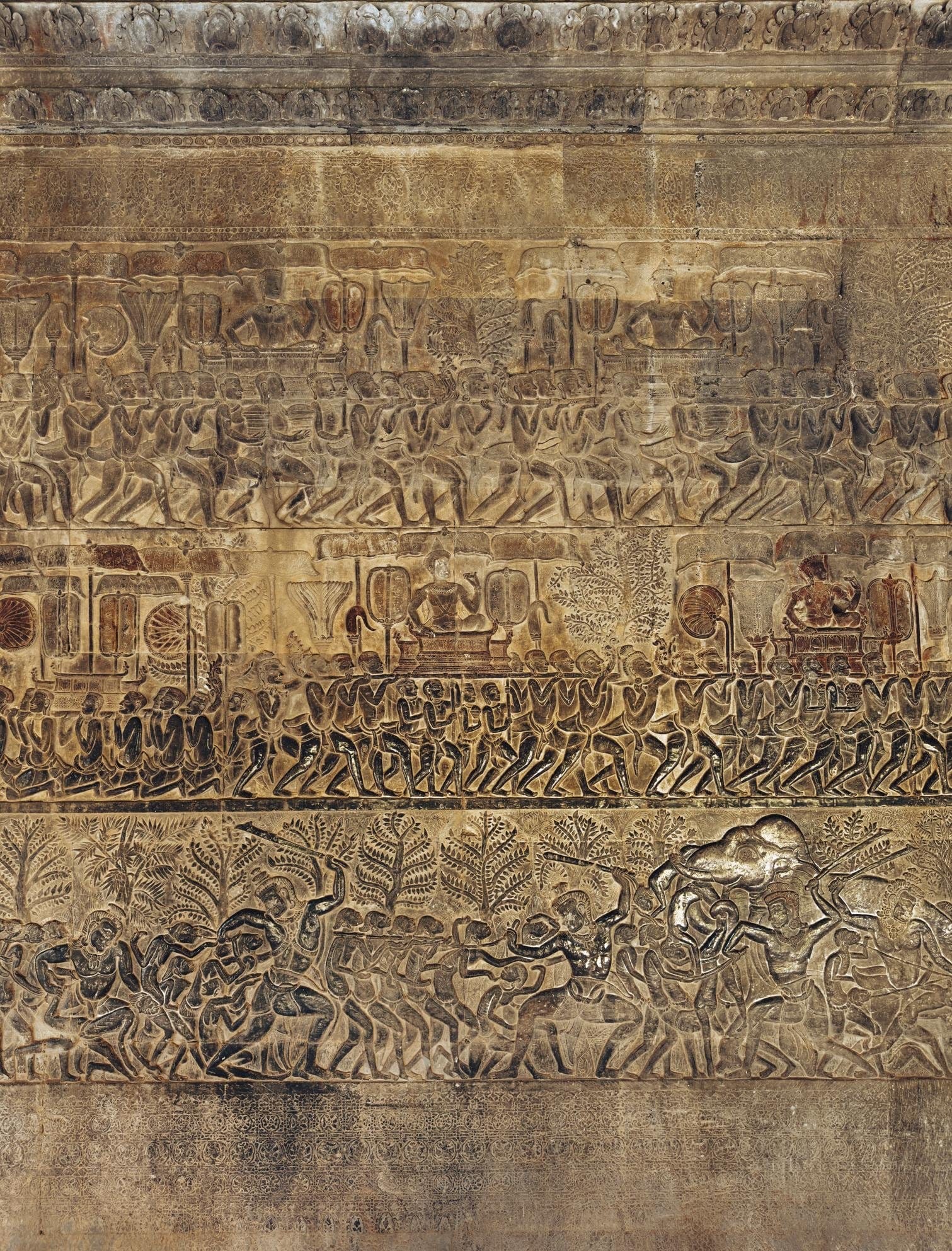
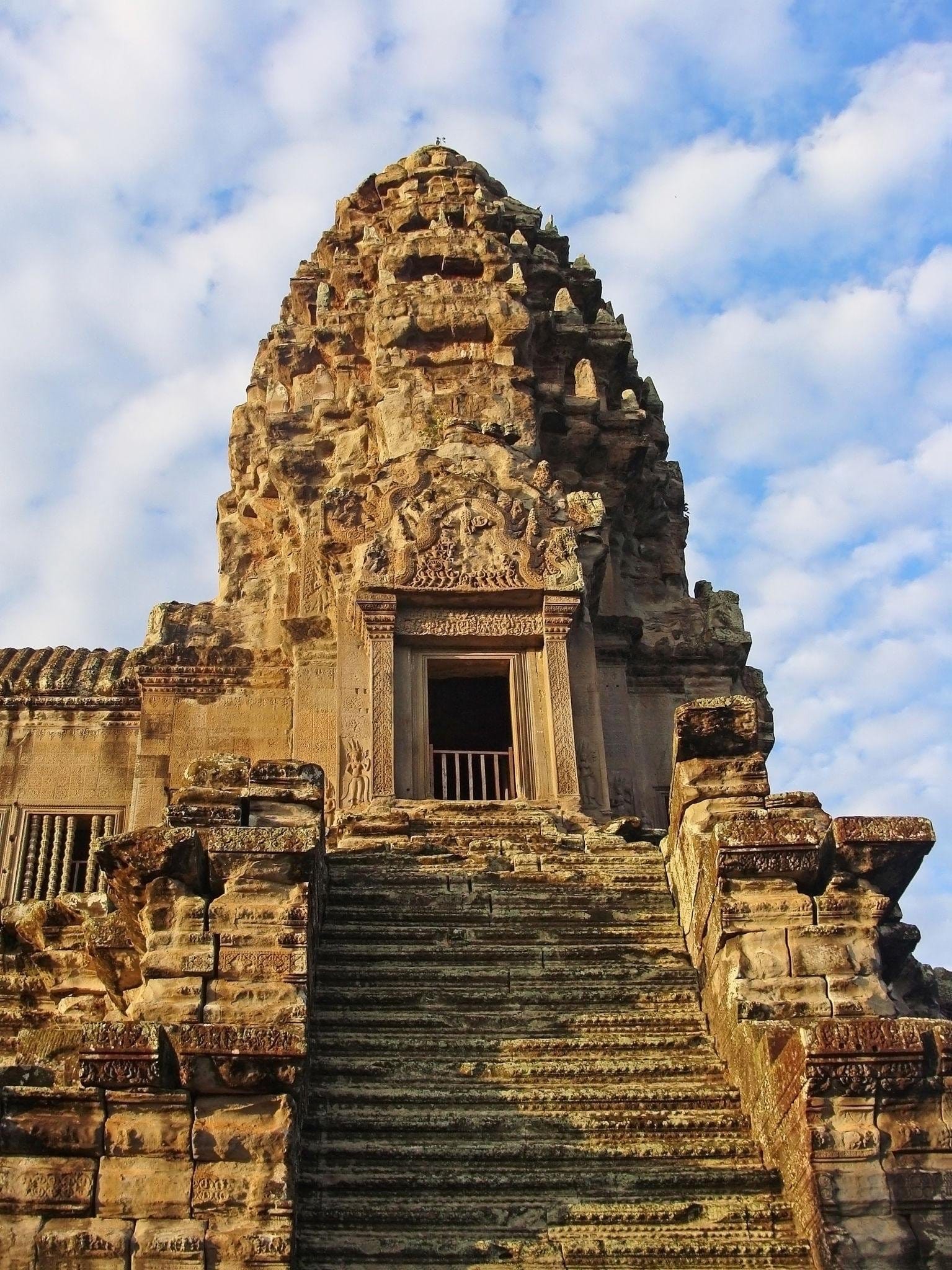
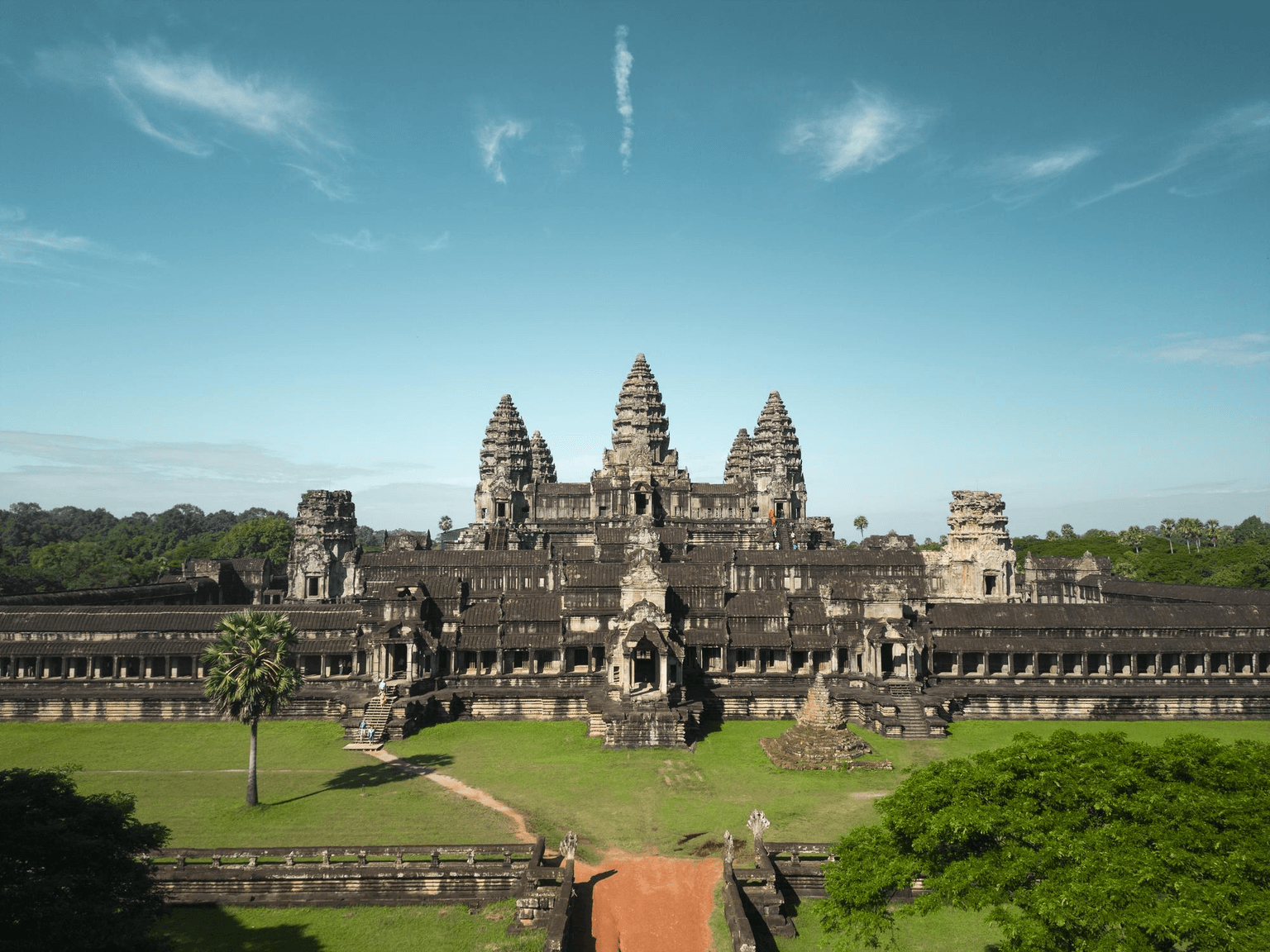
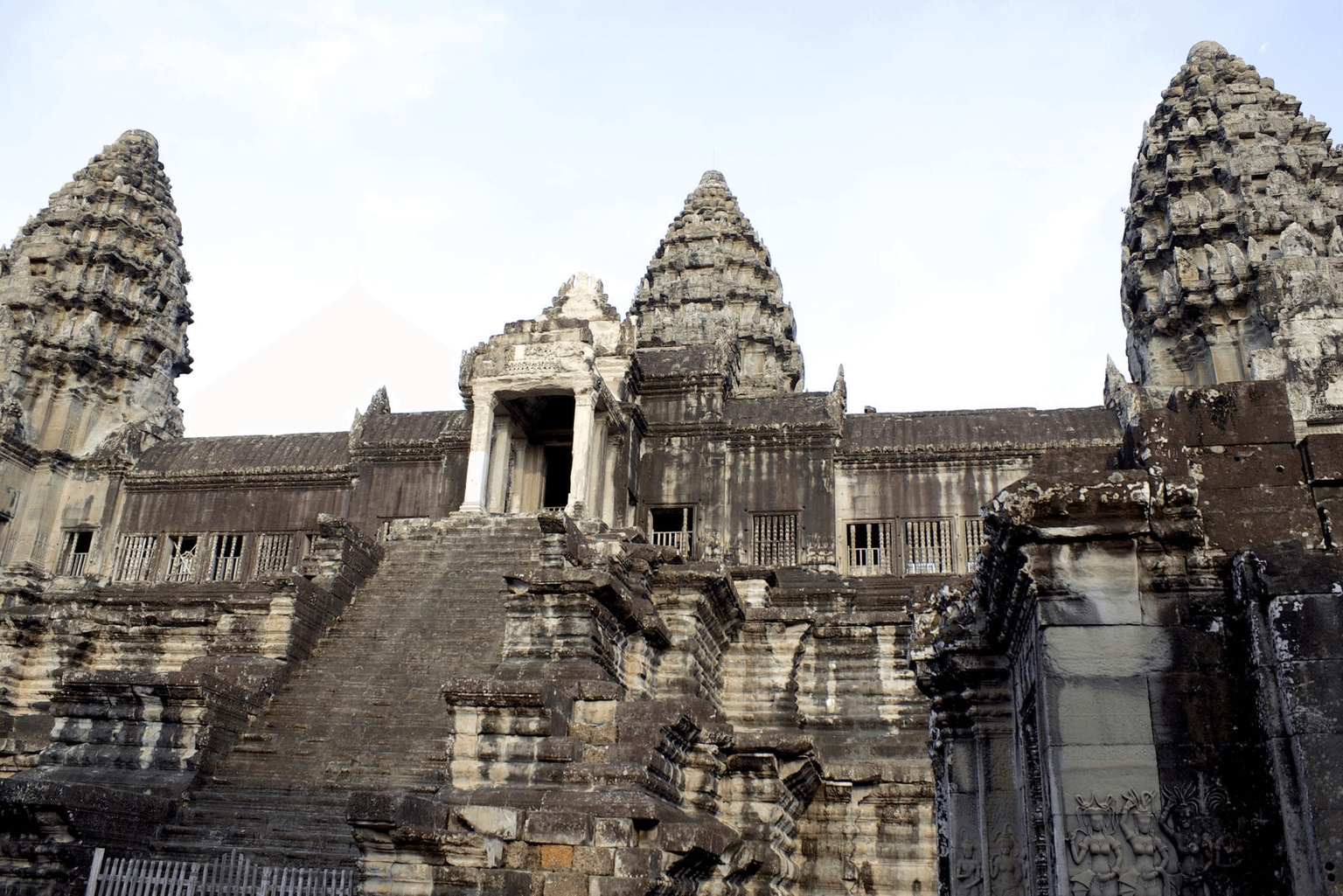
In the 12th century, Suryavarman II built Angkor Wat.
This structure exhibits a nearly cool rationality:
•   Precise proportions
•   Symmetrical composition
•   Nearly kilometer-long continuous bas-relief galleries
•   Lotus-shaped tower tops
More notably—it faces west.
In Hinduism, the west symbolizes death and rebirth. This also explains its potential dual function as a mausoleum.
If ancient Greek temples were a triumph of proportion, then Angkor Wat is a triumph of cosmology.
Buddhist Transformation: The Loosening of Structure
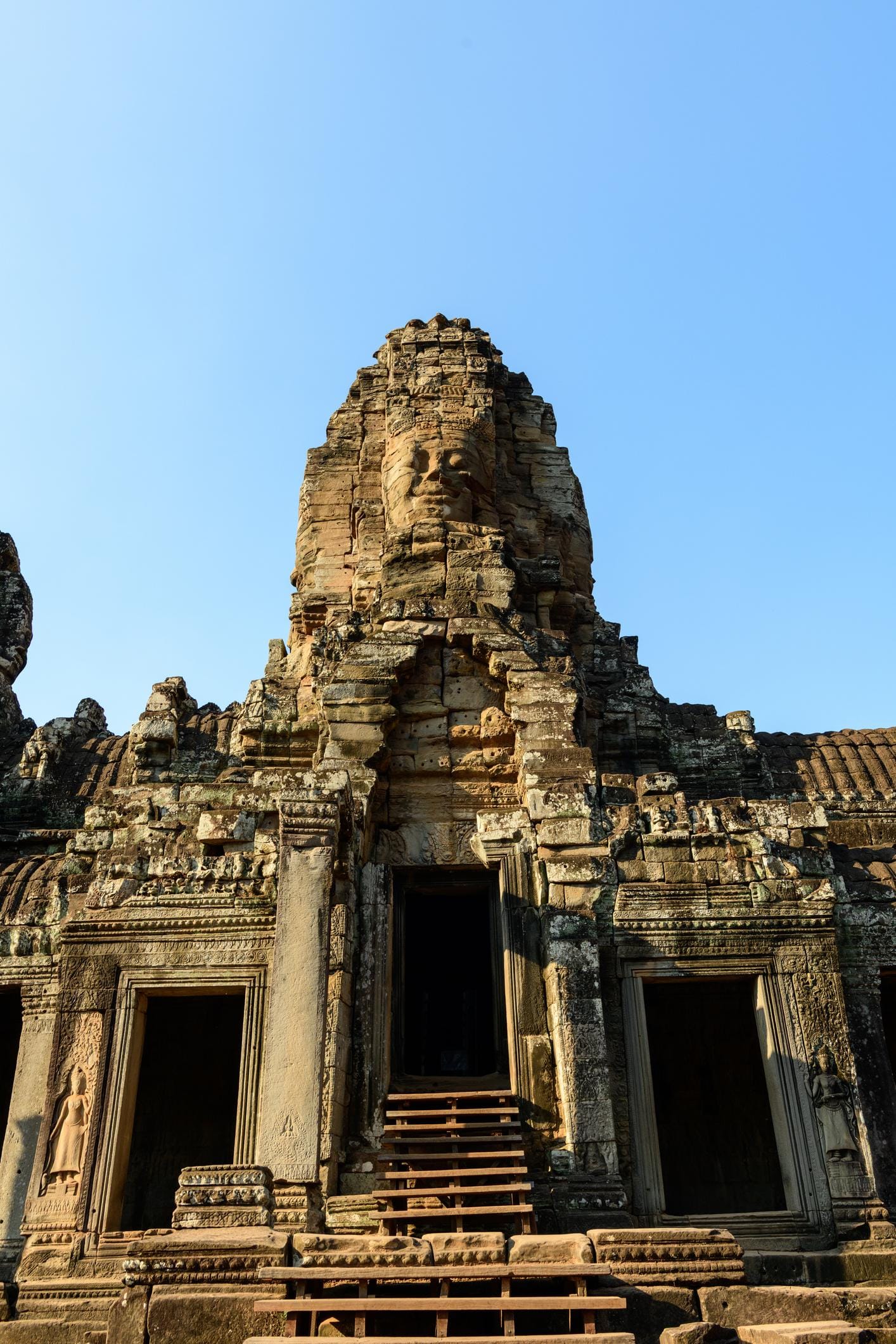
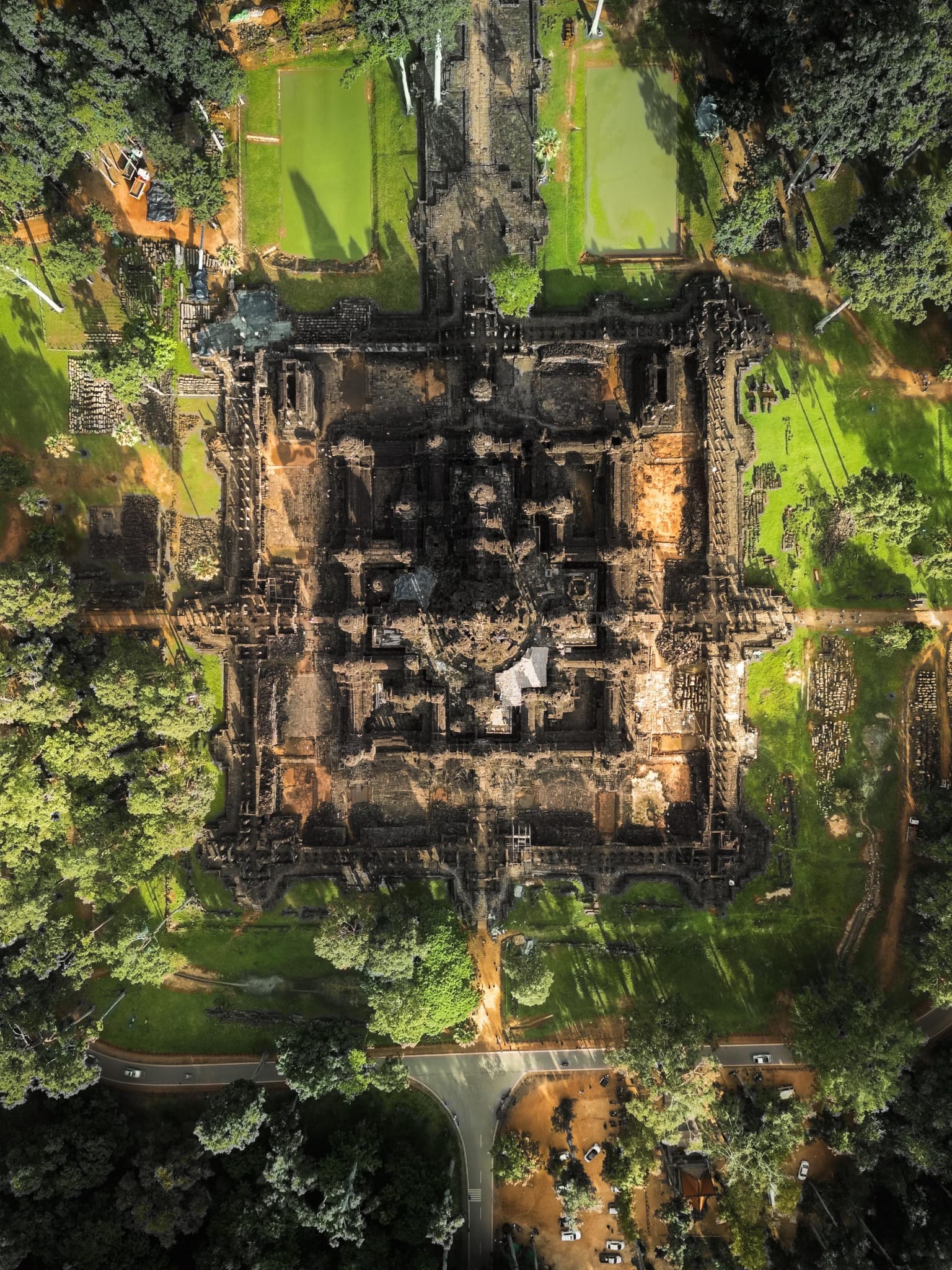
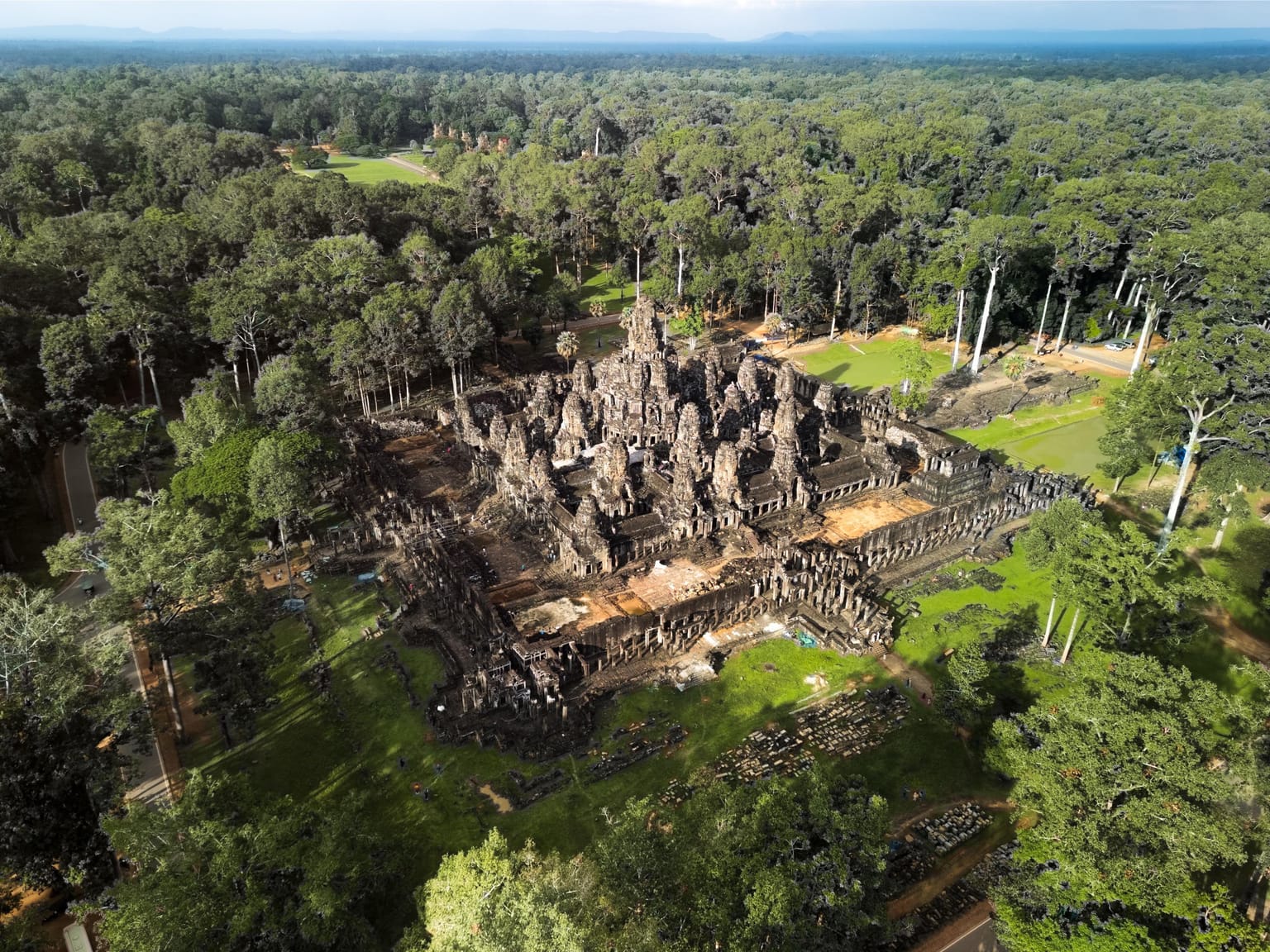
By the time of Jayavarman VII, Buddhism became the state religion.
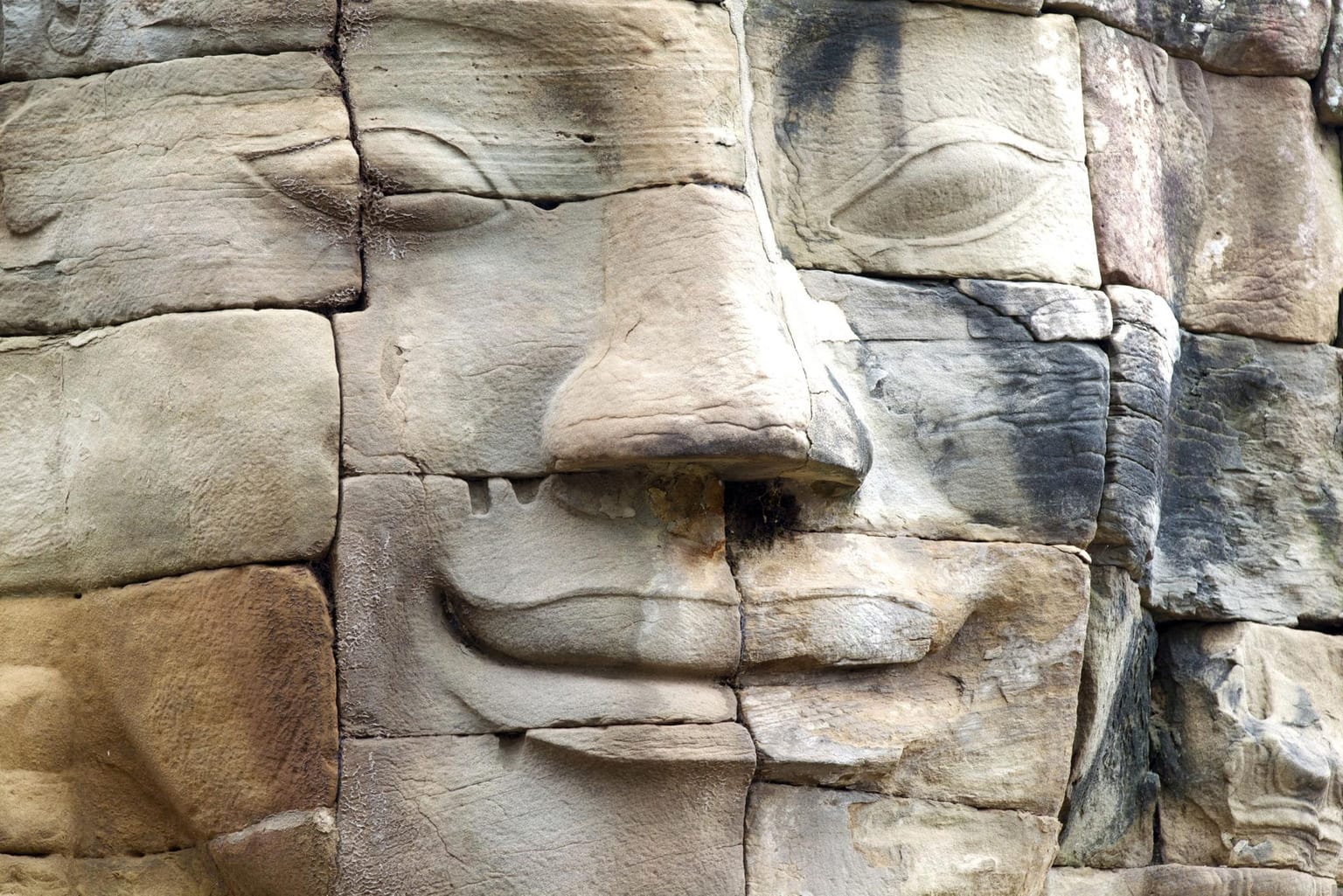
Bayon introduced the 'face towers.'
These smiling faces are believed to represent both Avalokiteshvara (the Bodhisattva of Compassion) and possibly the king himself.
The spatial logic also changed:
•   Geometric order weakened
•   Structure became denser
•   Emotional tone became more humanized
This was a simultaneous transformation of religion and space.
III. Their True 'Black Tech': Water
Many marvel at Khmer stonework. But what truly sustained the civilization was water.
Angkor is known as a 'hydraulic civilization.'
Massive reservoirs (Baray) were used not only for agriculture but also to maintain the stability of temple foundations.
Foundation structure:
•   Clay
•   Sand
•   Stone layers
Stable water pressure had to be maintained.
Once the hydraulic system collapsed— foundations destabilized, subsidence occurred, and temples began to collapse.
This was not a simple architectural problem. It was the collapse of an infrastructure system.
In a sense, the decline of Khmer civilization was the result of an engineering system failure.
IV. Decoration Is Not Decoration, It Is Narrative
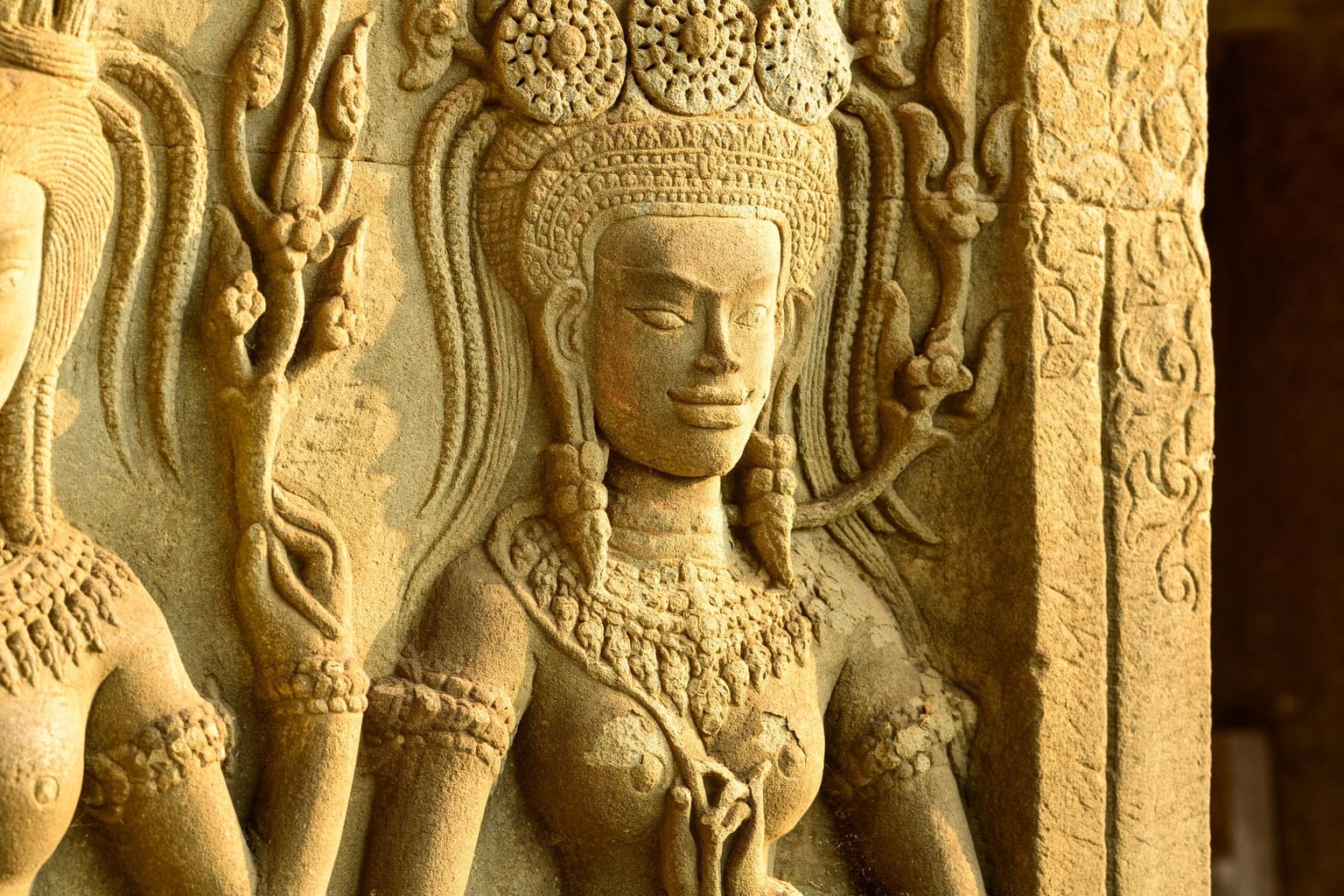
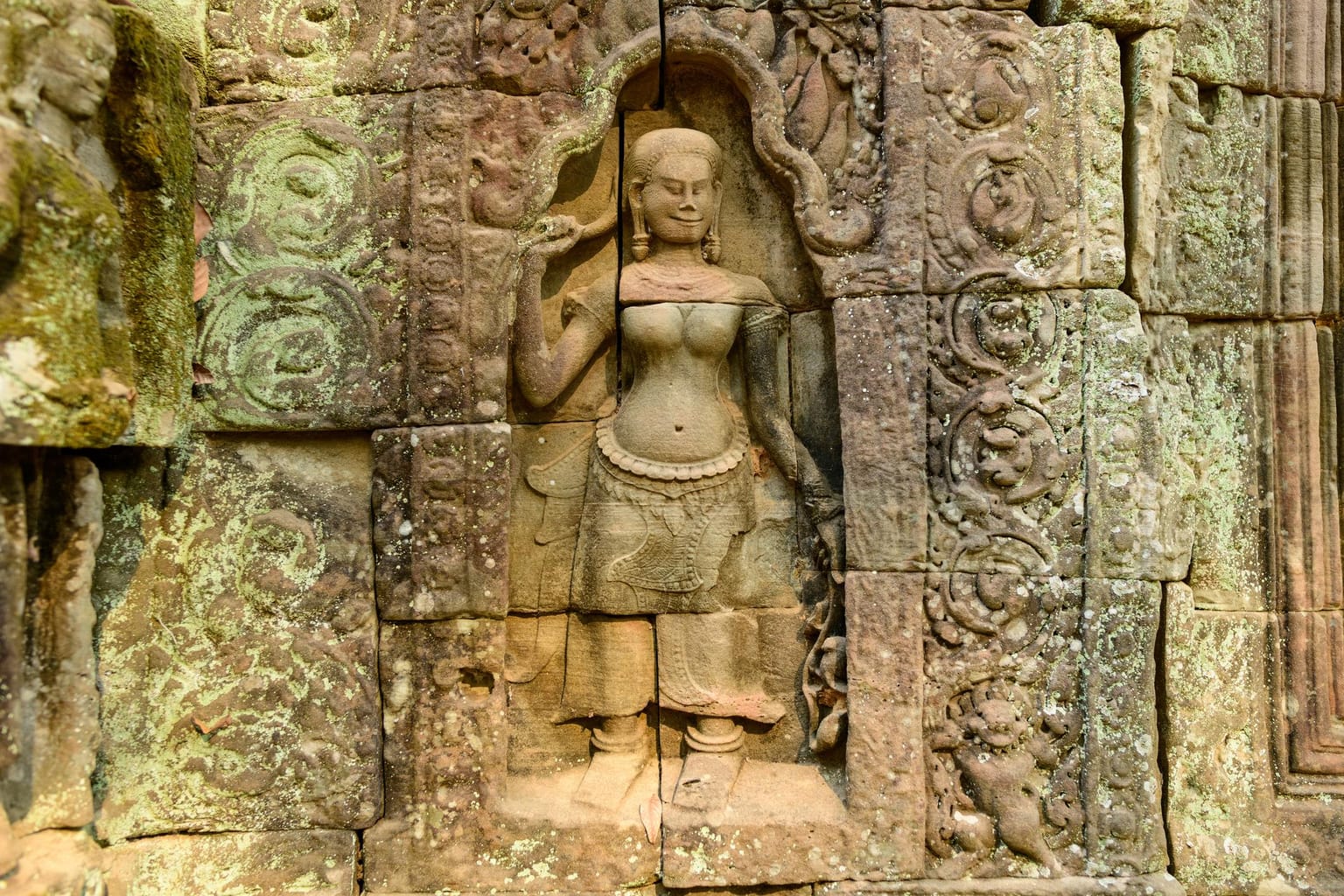
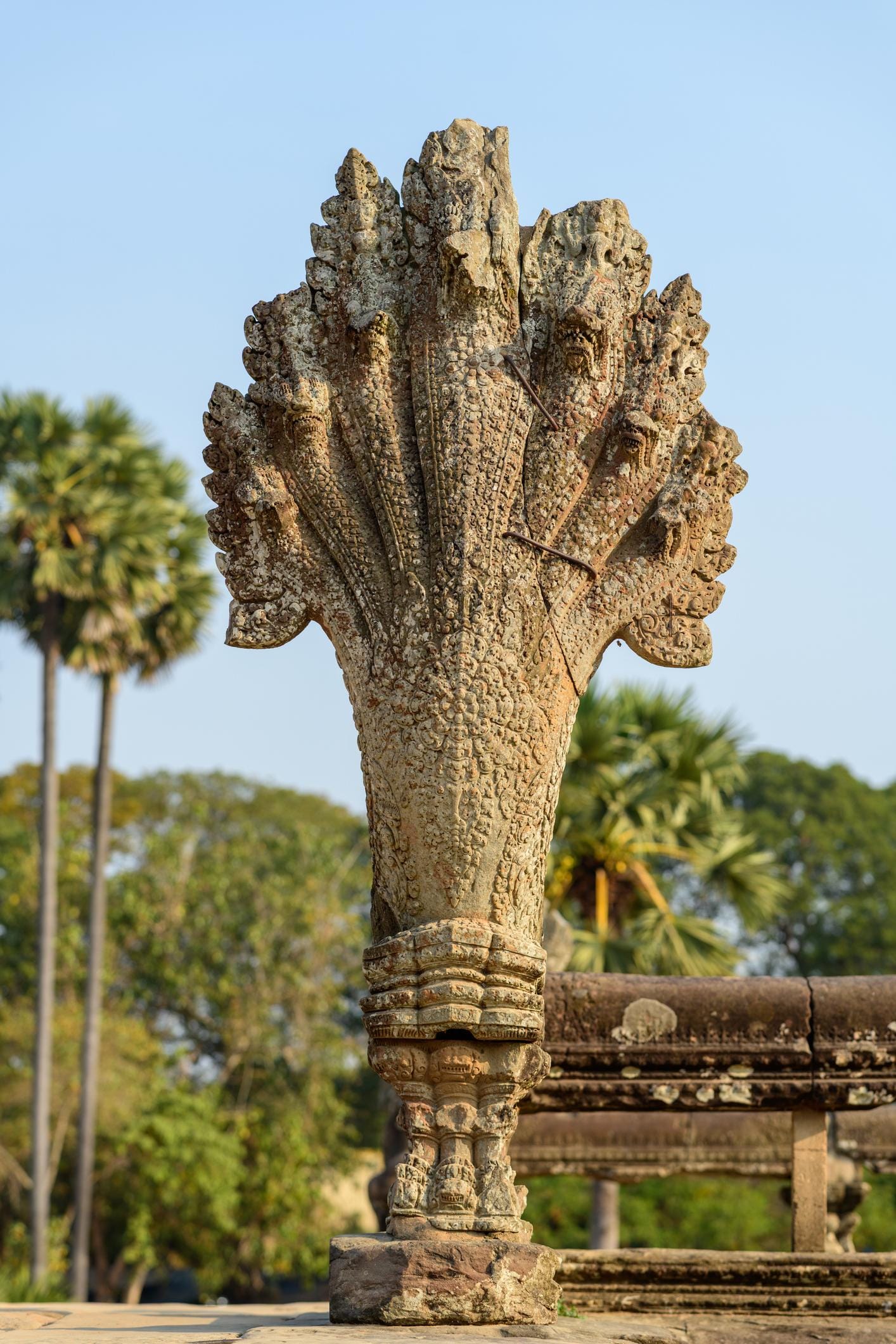
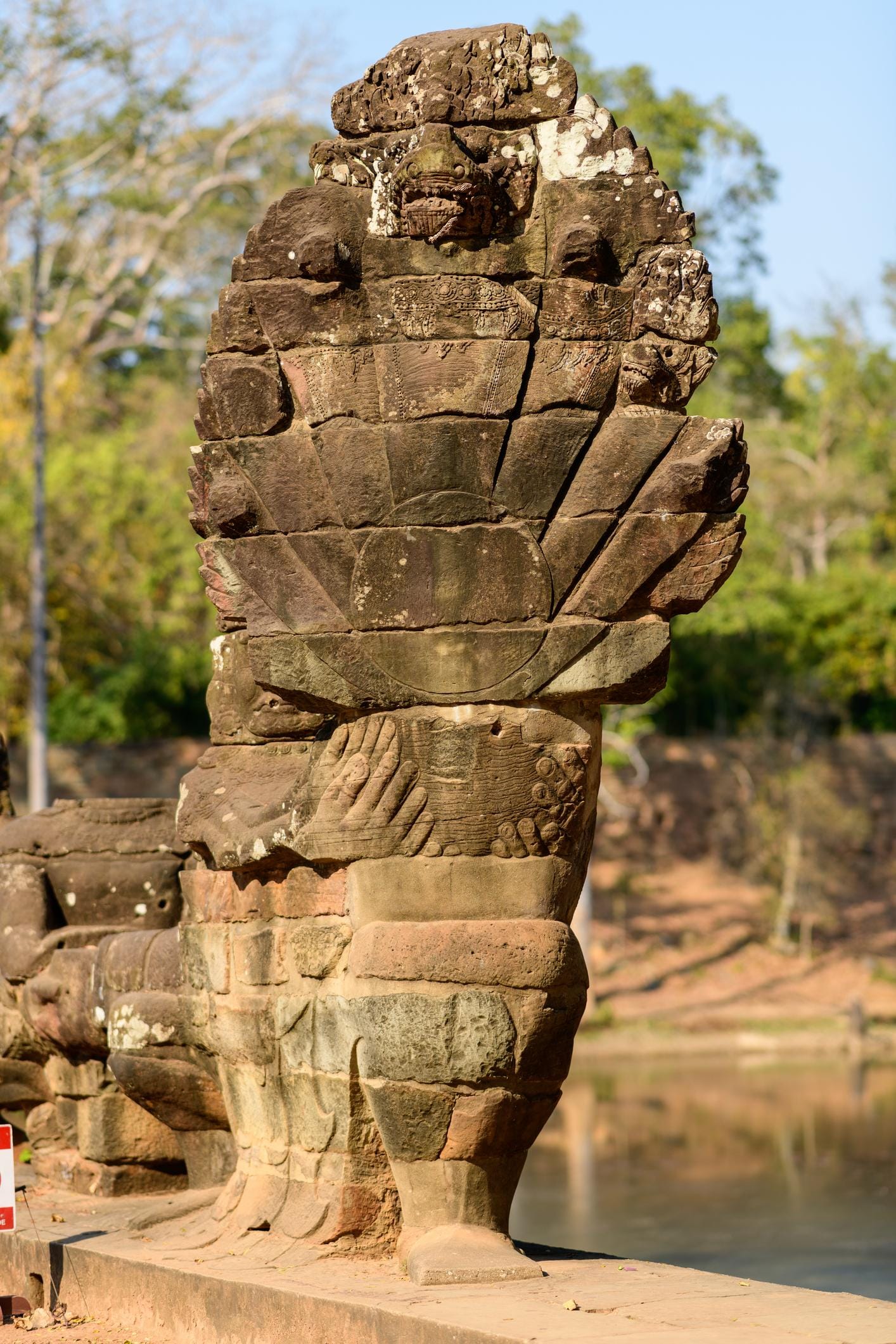
The bas-relief galleries of Angkor Wat represent a pinnacle of human narrative art.
One of the most famous scenes is the 'Churning of the Ocean of Milk.'
It is not a simple mythological depiction. It is about cosmic order.
The Apsara (celestial nymphs) on the walls record the clothing and aesthetics of the time.
The Naga symbolizes ancestors and rain.
When the Naga and Garuda appear together, it is a symbol of cosmic balance.
In Khmer architecture, walls were never left blank.
V. New Khmer Architecture: How Does Tradition Modernize?
After independence, Cambodia witnessed an astonishing architectural movement.
The leading figure was Vann Molyvann.
He did not replicate Angkor. Instead, he extracted its spatial spirit.
Representative works include:
•   Independence Monument
•   National Sports Complex Phnom Penh
The characteristics are very clear:
•   Elevated ground floors (to cope with the climate)
•   Concrete folded plates imitating traditional roofs
•   Water systems to regulate microclimates
This is not revivalism. It is a reinterpretation of structural logic.
VI. The Age of Glass Curtain Walls: Can the 'Khmer Sensibility' Be Preserved?
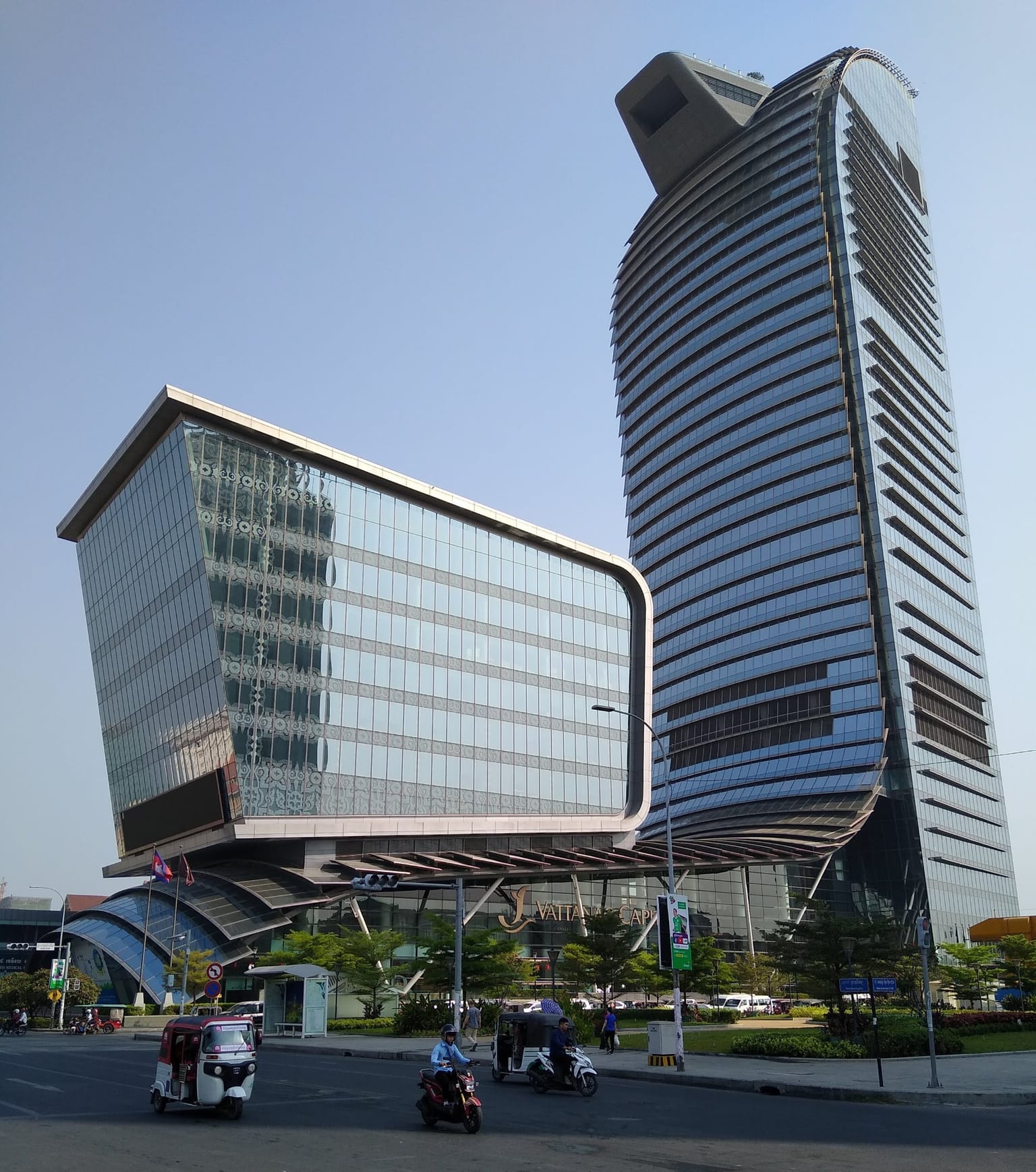
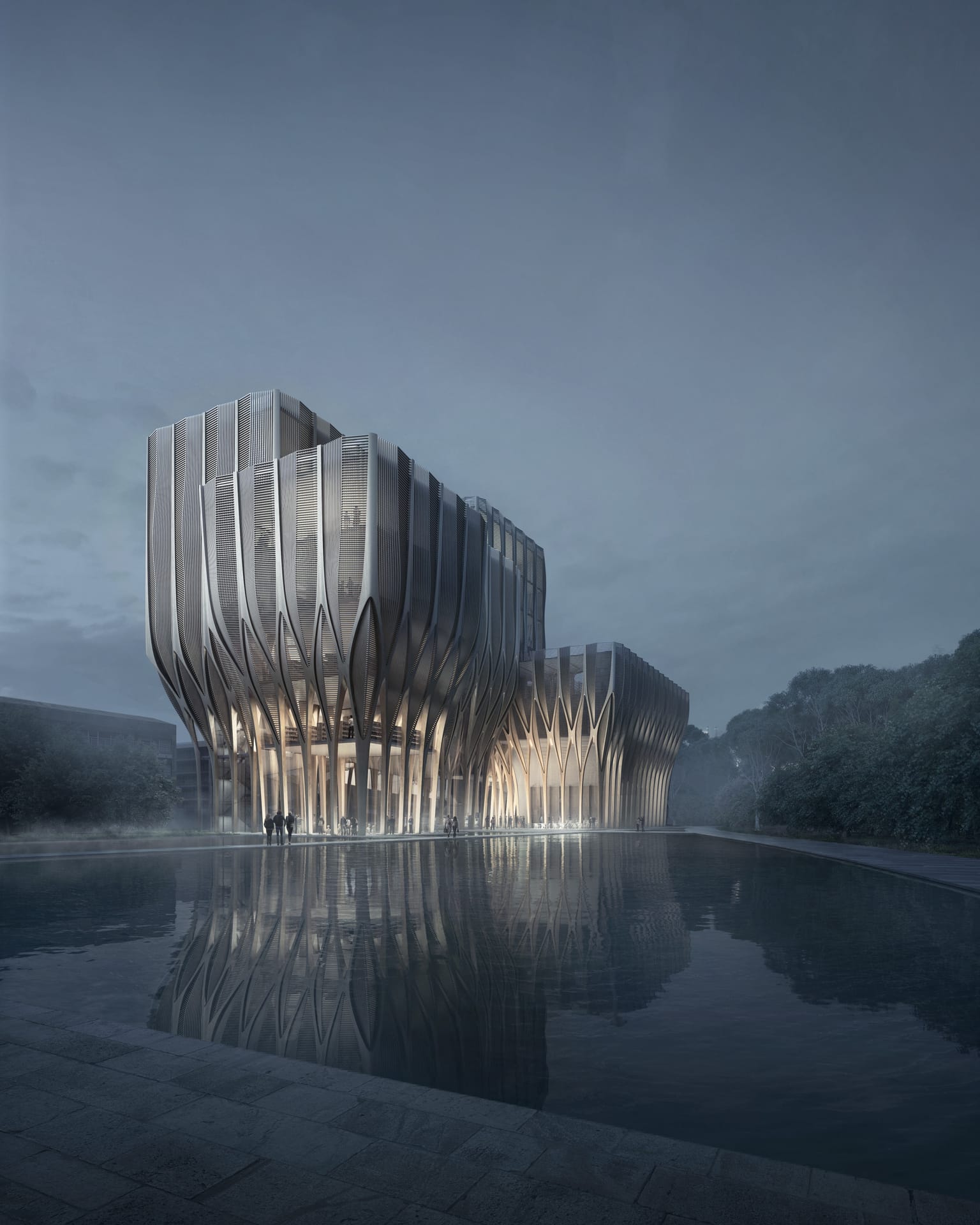
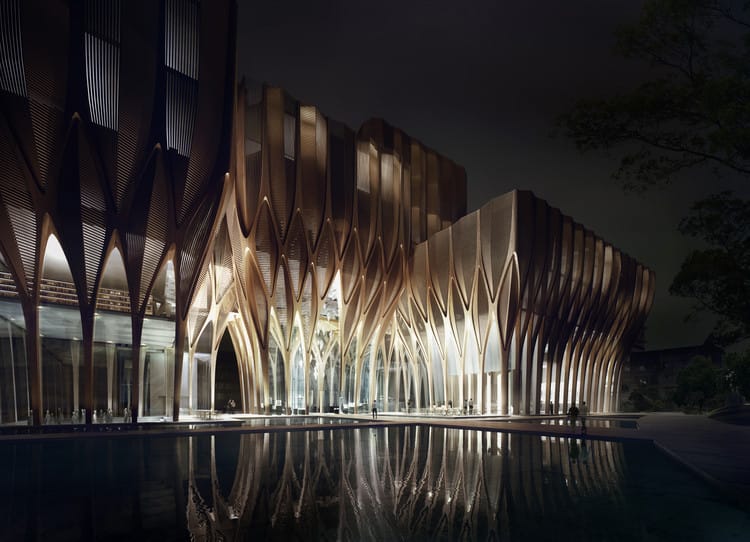
Today, the Phnom Penh skyline has been reshaped by modern skyscrapers.
For example, Vattanac Capital draws its silhouette inspiration from the dragon image, with Naga symbols embedded in its glass curtain wall.
And Zaha Hadid's design for the Sleuk Rith Institute abstracts the 'temple-mountain' structure with five wooden towers.
The question is:
Are we truly inheriting tradition, or are we consuming symbols?
This is the proposition that 21st-century Khmer architecture must confront.
Conclusion: Stone, Water, and Time
The greatness of Khmer architecture lies in its balance:
•   Divinity and power
•   Grand engineering and microscopic carving
•   Foreign cosmology and the local natural environment
It is not simply a historical heritage.
It is an architectural way of thinking about 'order.'
When you enter Angkor again, please don't just look up at the tower tops.
Look down at the water as well.
What truly sustains a civilization is often the inconspicuous systems.